Hugo Awards: History, Rules, Categories and Voting
A central guide to the Hugo Awards, including their history, who votes, how nomination and final ballots work, categories, trophies, and Worldcon context.

The Encyclopedia of Fandom
Fancyclopedia is an editorial reference site for the history, language, people, publications, conventions, awards, and community traditions of science fiction fandom.
Starting points for understanding how fandom became a culture of its own.
A guide to tuckerization, the practice of naming a fictional character after a real person, especially a fan, friend, or auction winner.
A focused guide to the Big Heart Award, the Worldcon-associated fandom service honor, including its origin, meaning, recipients, and community value.
A history of fanzine reviews as a form of fan criticism, community feedback, bibliographic memory, and publishing conversation.
Freshly edited articles from the reference archive.
A central guide to the Hugo Awards, including their history, who votes, how nomination and final ballots work, categories, trophies, and Worldcon context.

A practical glossary of science fiction fandom terms, including fanac, sercon, trufan, gafia, fanzine, loc, apa, faned, and fanspeak.
A clear explanation of what a fanzine is, how science fiction fans used fanzines, and why fanzines became central to fandom history.
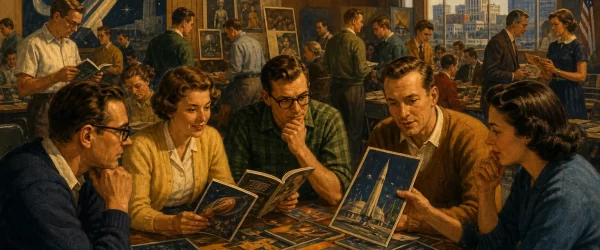
A guide to Nashville science fiction fandom as part of the Southern fan network, covering conventions, clubs, universities, fanzines, Hypericon, DeepSouthCon, and regional fan history.

A focused history of Secondary Universe I, the 1968 University of Wisconsin-Milwaukee conference that treated science fiction and fantasy as serious subjects for public and academic discussion.
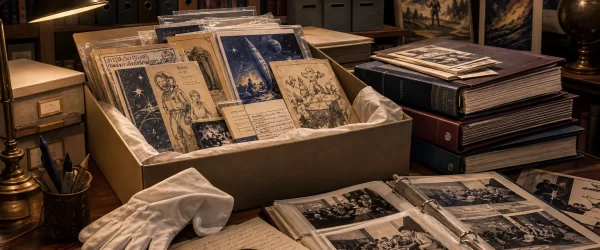
A professional overview of Fanhistorica as part of the fan-history movement that preserved documents, memories, fanzines, and historical writing from science fiction fandom.
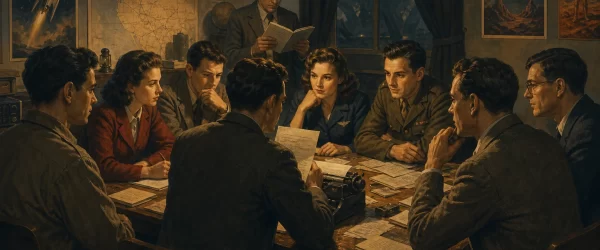
A rewritten history of the 1943 Michiconference in Battle Creek, its wartime setting, and its connection to the Slan Shack and fan-house culture.
A direct history of Hugo Gernsback’s Science Fiction League, founded in 1934 through Wonder Stories, including its chapters, purpose, and influence on organized fandom.
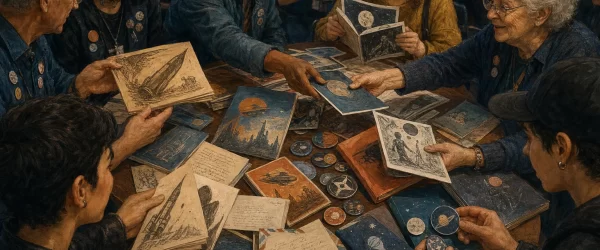
An editorial explanation of what “fan” means in science fiction culture, from private enthusiasm to active participation in communities, fanzines, conventions, and archives.

A practical guide to the First Fandom Hall of Fame award, including what it honors, who is eligible, and why the winners matter to science fiction history.